Fieldwork · Web · 2025
大同致富花Daylily: The Flower That Pays
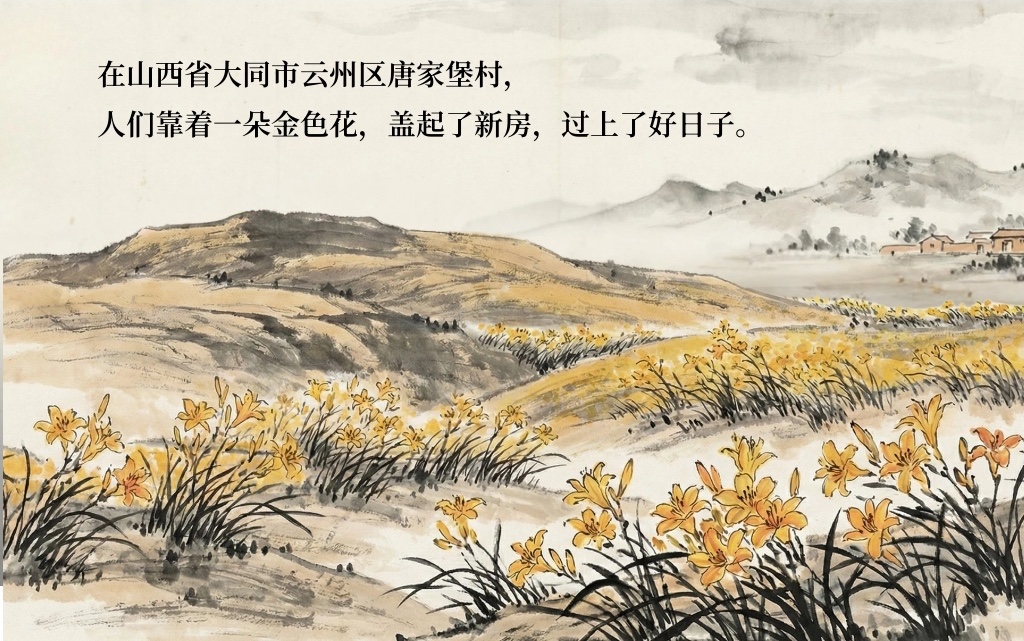
在山西省大同市云州区唐家堡村,人们靠着一朵金色花,盖起了新房,过上了好日子。这件作品来自一次真正下到产业基地的田野调查:黄花产业如何帮助大同完成产业转型?In Tangjiabao village, Datong, a single golden flower paid for new houses and better lives. The piece comes from fieldwork on the ground: how did the daylily industry carry a coal city through its transition?
- Role
- 核心成员 · 网页制作 / 系列视觉设计Core member · web build & visual design
- Year
- 2025.11–2025.12
- Method
- 实地田野调查On-site fieldwork
- Outputs
- 网页 · 报纸《忘忧报》 · 公众号Web · newspaper · WeChat
背景Context
大同长期被定义为煤炭城市。当煤不再是唯一答案,这座城市拿什么接上?我们跟着专业采风课程去了云州区的黄花产业基地,想看清楚一件事:一种农产品,究竟能在多大程度上托住一个地方的产业转型。Datong has long been defined by coal. When coal stops being the only answer, what carries the city? Our field course took us to the daylily production base in Yunzhou to find out how far one crop can actually carry a local economy.
问题The problem
乡村产业题材的报道常需要在数据硬度与叙事温度之间寻找平衡。为此,团队采取了多维度的融媒体传播策略:以交互网页承载宏观数据框架,以报纸沉淀人文特稿质感,以新媒体端拓展传播半径,使宏大议题切实落脚于个体故事。Reporting on rural industries requires balancing hard data with human warmth. To achieve this, the team adopted a multi-dimensional media strategy: interactive web pages for macro-data, newspapers for human-interest depth, and social media for outreach, ensuring grand themes were grounded in individual stories.
为什么用水墨Why ink-wash
在视觉定调上,项目主动摒弃了常规数据新闻的高饱和色彩,采用水墨长卷风格进行排版。金黄色的农产品成为画面核心的视觉锚点,大面积的留白有效提升了产业数据的可读性与视觉美感。For visual direction, the project deliberately abandoned the high-saturation colors typical of data journalism, adopting an ink-wash scroll layout. The golden agricultural product became the core visual anchor, and the extensive negative space effectively enhanced the readability and aesthetic of the industry data.
结果Outcome
调研成果最终获得课程一等奖。三种载体中,网页承担了完整的数据叙事,报纸《忘忧报》和团队公众号承担了传播。The project took first prize in the course. The web page carried the full data narrative; the newspaper and WeChat account carried distribution.